One typed file per business
Name, services, prices in dirhams, opening hours, WhatsApp number — every text field holds its French and its Arabic side by side, so a missing translation is a type error, not a surprise in production.
Case study — side project, 2026
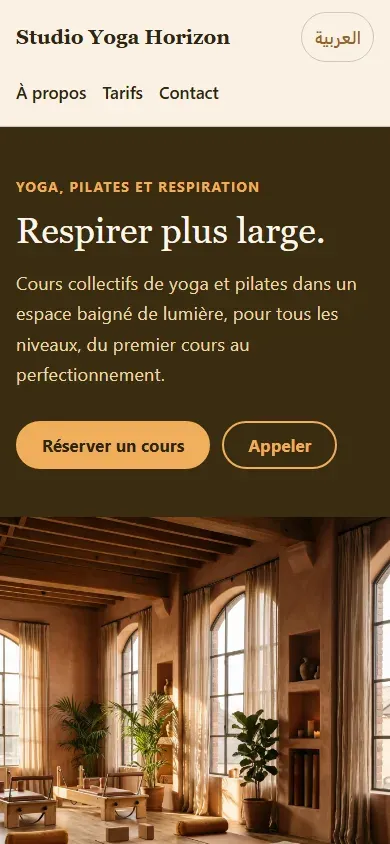
One small engine that builds a complete website for a local business, in French and in Arabic, from a single content file. It currently builds 60 of them — a riad, a law firm, a plumber, a pet shop — and all 60 are live.
The problem
A small business in Morocco needs its website in French and in Arabic. Arabic reads right to left, so that is two layouts, not one page run through a translator. Building each site by hand does not scale past a handful, and a page builder gives every business the same look.
Site Kit takes the other route: the structure is written once, and each business is only data. Adding a business means adding one content file and one colour file. Nothing else changes, and the tests cover the new site without anyone writing a new test.
How it works
Name, services, prices in dirhams, opening hours, WhatsApp number — every text field holds its French and its Arabic side by side, so a missing translation is a type error, not a surprise in production.
The same function renders both languages. The layout uses CSS logical properties (margin-inline, not margin-left), so the Arabic page mirrors itself with no second stylesheet.
Each business gets its own palette, corner radius and display font in a short CSS file. The riad and the garage share every line of structure and look nothing alike.
The build writes plain HTML and CSS. Each site lands in its own self-contained folder, so one of them can be handed to a client and hosted anywhere without the other fifty-nine.
System fonts, one hero photo per site, and gallery thumbnails generated at build time: all 56 thumbnails together weigh about one megabyte.
Every piece of business data is escaped on the way out, pages carry a Content-Security-Policy, and the structured data for search engines can never close its own script tag.
The result
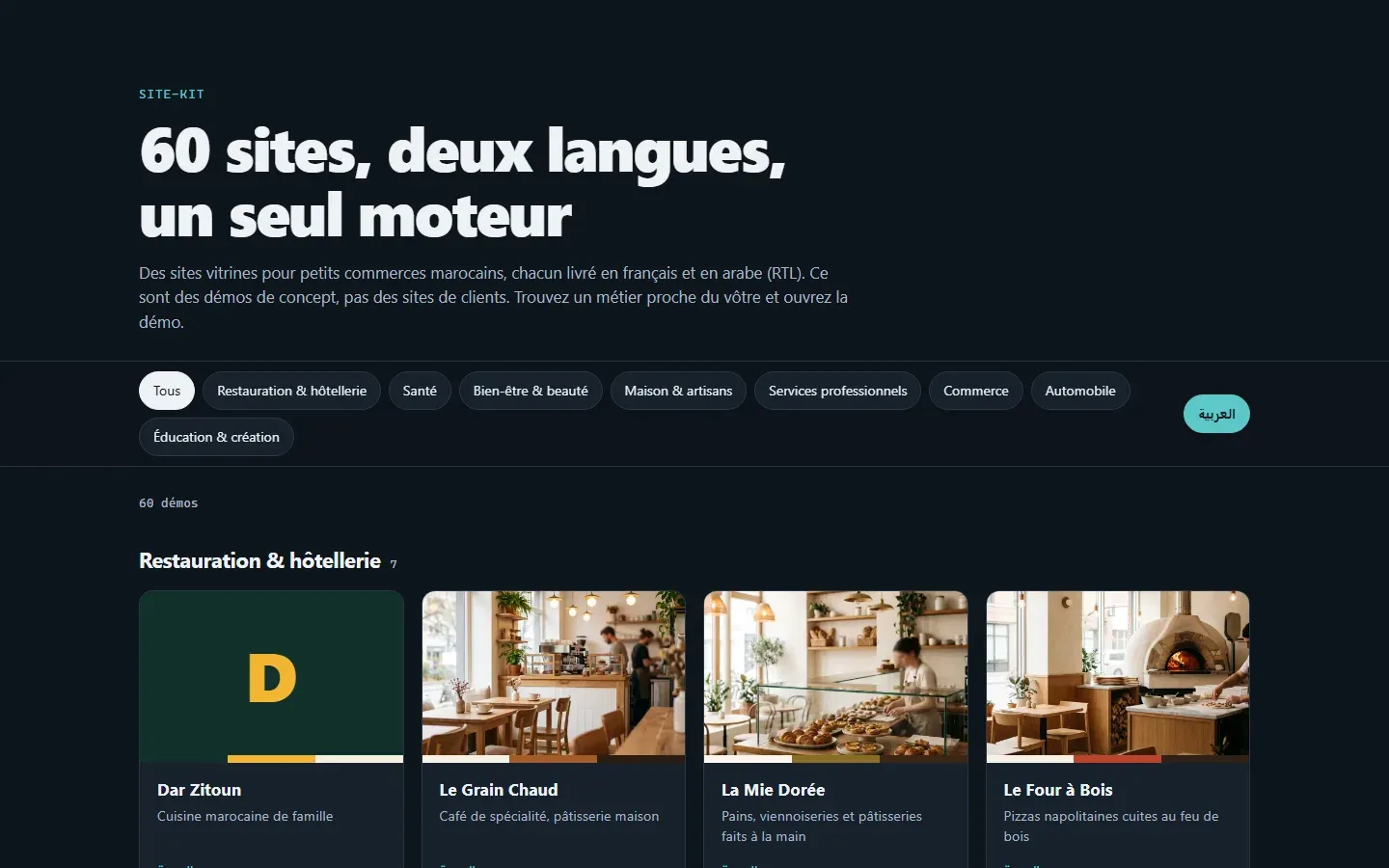
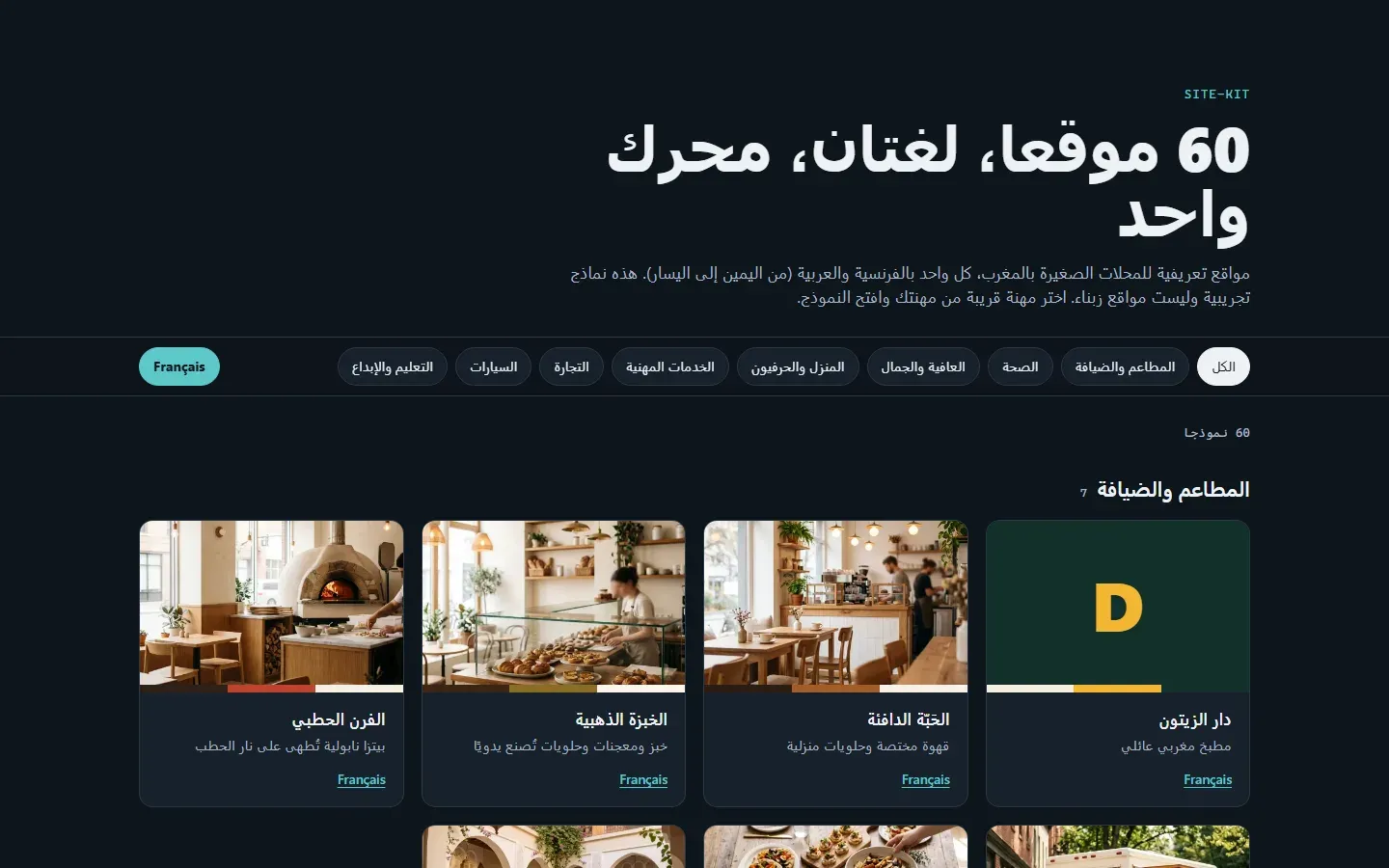
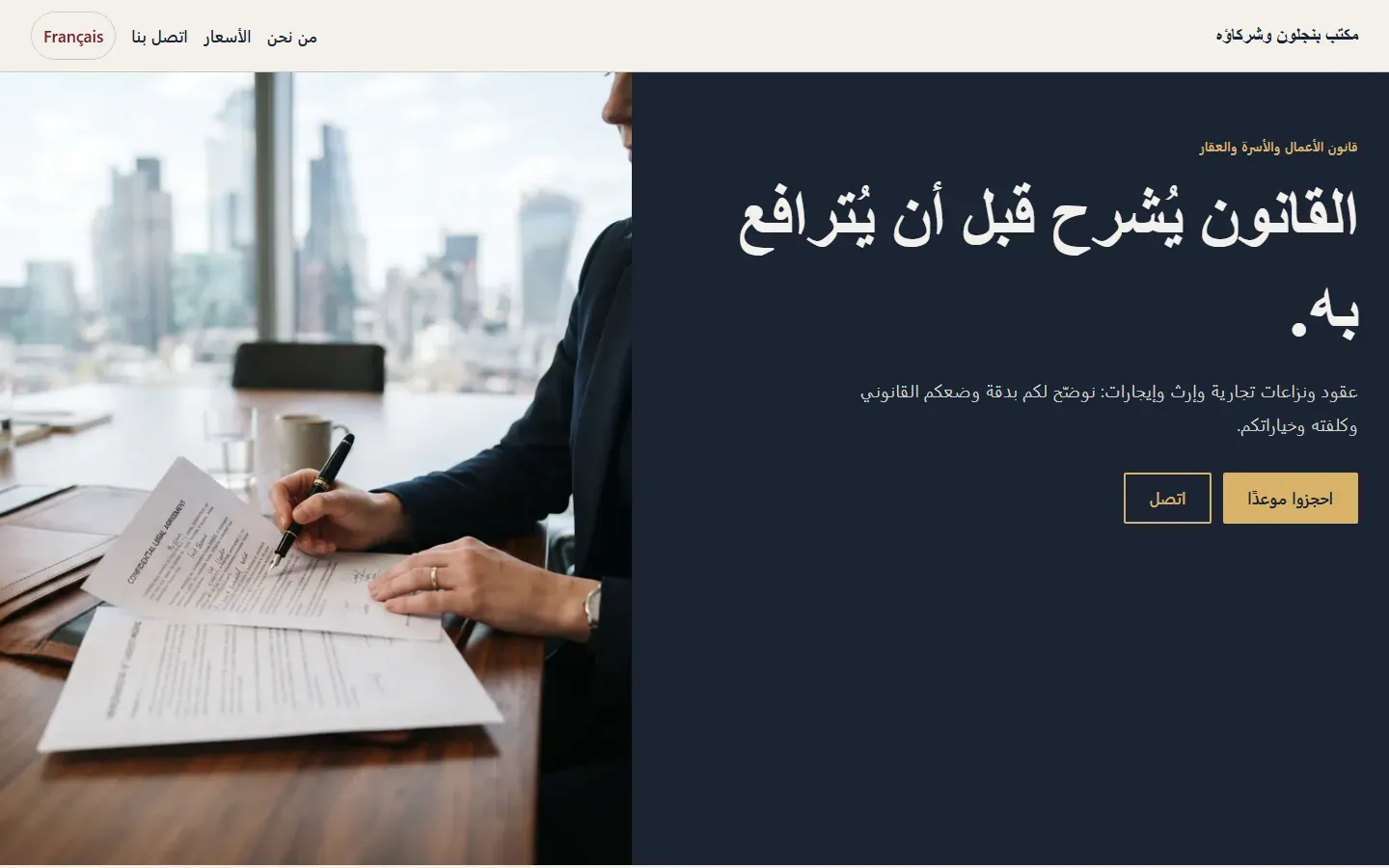
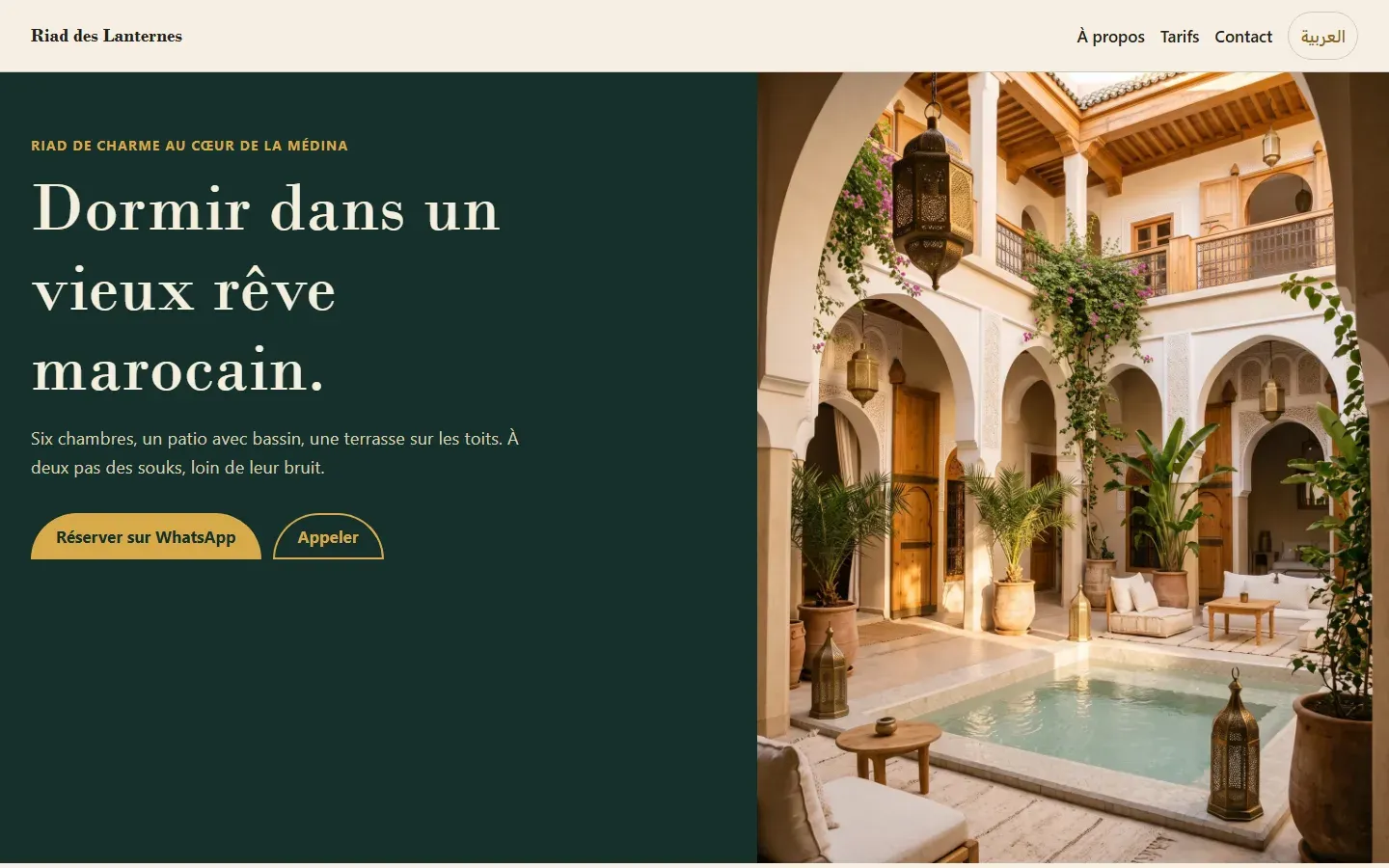
Quality
Most of the tests are generated from the list of businesses, which is why there are so many and why a new site is covered the moment it is added. For every site, in both languages, they check that text meets the 4.5:1 contrast ratio on the page, on buttons and over the hero photo; that no field is empty; that every price is shown; and that hostile input comes out escaped.
What they cannot check is meaning. A full read of the Arabic, side by side with the French, found a hospital page telling readers it was “perpendicular to insurers” — one wrong letter, 497 green tests. That review is written up in the Ship Log.
How it was built
The code, the copy and the test suite were written by AI coding agents working under my direction. I did not type most of this, and I would rather say so than let a case study imply otherwise.
My part was the direction: what to build and for whom, the rules it had to follow (two languages, prices in dirhams, demos labelled as demos), the calls when a trade-off came up, review of what came back, and the go or no-go on every deploy. Working this way is a skill of its own — a vague brief produces sixty vague websites — and it is the part of this project I can speak to in detail.
Honest limits
The 60 sites are concept demos, not client work. The businesses, phone numbers and testimonials are invented, and the photos are AI-generated. The Arabic has had a full review, but not by a native Moroccan proofreader, which a real client’s site would need before launch.